
Clean Egg-Laying Duck Farming: A Model Creating Sustainable Livelihoods for Ho Chi Minh City Farmers
Clean Egg-Laying Duck Farming: A Model Creating Sustainable Livelihoods for Ho Chi Minh City Farmers
Demand for clean food is growing, and organic duck eggs are becoming a product sought by urban consumers. In this context, the **clean egg-laying duck farming model** not only opens up a new livelihood opportunity for Ho Chi Minh City farmers, but is also tied to a closed-loop value chain from breeding stock to product sales.
The article below analyzes how these models operate, their actual economic effectiveness, and the role of supporting businesses in creating stable livelihoods for local farmers.
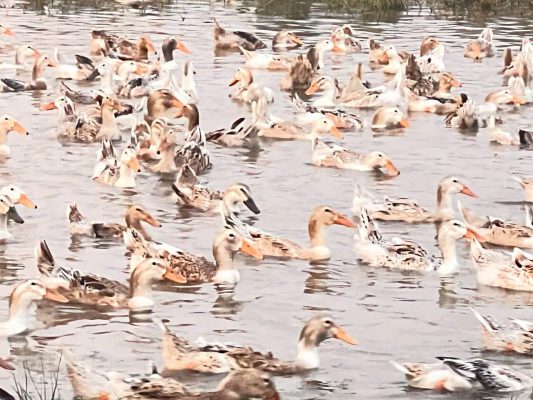
What is the clean egg-laying duck farming model?
Raising clean ducks for eggs is a method of raising laying ducks in an organic and biosecure manner, aimed at producing high-quality eggs that are safe for consumers’ health.
Unlike traditional farming methods, this model focuses on three factors: well-ventilated housing, chemical-free feed, and a transparent monitoring process.
In Ho Chi Minh City, the City Farmers’ Association has implemented a plan to produce organic duck eggs in Long Điền Commune, using funding from the Farmers Support Fund to build a safe agricultural value chain.
The core objective is to help members transform their production methods, increase product value, and create a stable, long-term source of income.
Under the program’s guidelines, participating households must comply with transparent farming procedures, refrain from using banned substances, and work toward meeting VietGAP or equivalent standards.
This is an effective way to use support funds for their intended purpose, mitigate risks, and ensure consistency in the development of clean agriculture.
Why is organic duck egg farming a sustainable path?
Clean farming and food safety
Organic duck egg production requires compliance with strict standards: organic feed, no antibiotics, no genetically modified ingredients, and ducks allowed to roam freely instead of being confined in cages.
The ducks are allowed to molt naturally and are managed at an appropriate scale, with a focus on animal welfare and environmental protection. As a result, the eggs are clearly different from conventional eggs in terms of safety and quality.
Higher economic efficiency
This is the decisive factor attracting farmers’ interest. According to the program’s plan, the clean farming process is expected to yield approximately 200–250 eggs/duck/year, with a survival rate of **over 95%,
while also reducing feed and veterinary medicine costs. As a result, members can earn profits 20–30% higher than with traditional farming methods.
Stable market access through guaranteed purchasing arrangements
One of livestock farmers’ greatest concerns is that “a bumper crop leads to falling prices.”
This model addresses that concern through a coordinated marketing mechanism: partner businesses commit to purchasing the products, allowing farmers to confidently expand their operations without having to find buyers on their own.
The organic-standard process for raising clean ducks for eggs
1. Select ducklings and prepare housing
Ducklings are a fundamental factor in determining productivity. Farmers should select healthy, active ducklings with clear origins and complete quarantine certification.
Housing must be well ventilated, dry, elevated, and easy to clean; an appropriate stocking density helps reduce stress and promotes more consistent laying. In the clean farming model, the housing floor is covered with biological bedding to control odors and limit pathogens.
2. Controlled feed and drinking water
Ducks are raised in semi-natural conditions using chemical-free feed. Drinking water is strictly controlled and supplemented with probiotics to strengthen the flock’s resistance to disease. Nutritional balance directly determines the laying rate, egg weight, yolk size, and shell strength.
3. Disease prevention and biosecurity
Instead of overusing antibiotics, the model prioritizes proactive disease prevention: regular housing sanitation, disinfection, and full vaccination according to schedule.
Once farmers have mastered the process, they can proactively prevent disease and reduce their reliance on medication, both saving costs and ensuring compliance with organic standards.
4. Egg collection and storage
Ducks generally lay most of their eggs at night and in the early morning, so eggs should be collected several times a day to keep them clean and prevent breakage. After collection, the eggs should be placed in trays and stored in a cool, dry place to preserve their freshness and quality for longer.
5. Quality monitoring Monitoring is given the highest priority.
Monitoring teams track the use of funds, the condition of the duck flocks, the farming environment, and production efficiency. Regular inspections help ensure that loans are used for their intended purpose, egg quality meets requirements, and the model operates according to its commitments.
The “funding – production – distribution” partnership: the role of the partner business
What distinguishes the model is its closed-loop partnership connecting funding, production, monitoring, and distribution. Within this chain, “Duy Phát Company” serves as the business partner supporting farmers from technical guidance through product purchasing.
The plan states that Duy Phát expects to implement the program for approximately “55 local households and provide more than 200,000 ducklings,” along with feed and an organic duck egg production process, while also guaranteeing product purchases.
The company commits to signing contracts to purchase at least 80% of the egg output, allowing farmers to confidently expand their operations.
At the same time, Farmers’ Associations at all levels support product promotion through trade fairs, agricultural markets, the OCOP program, and reputable distribution channels.
The long-term goal is to build a local organic duck egg brand and establish a strong position in the Ho Chi Minh City and Southern Vietnam markets.
Expected outcomes of the model
When implemented in a coordinated manner, the clean duck egg farming model aims to deliver three benefits:
– For farmers: stable income, profits 20–30% higher than with traditional farming, and guaranteed market access.
– For consumers: a supply of clean, safe eggs with traceable origins.
– For the locality: the establishment of a concentrated production area, progressing toward a distinctive local agricultural brand and a cooperative model.
Frequently Asked Questions (FAQs)
1. How does raising clean ducks for eggs differ from traditional duck farming?
Clean duck farming follows organic and biosecurity procedures: no banned substances, limited use of antibiotics, controlled feed and drinking water, and housing with biological bedding. The resulting eggs are safer and can be sold at higher prices than conventional eggs.
2. How many eggs does one duck produce each year?
Under the model’s clean farming process, expected productivity is approximately 200–250 eggs/duck/year, with a survival rate above 95%.
3. Is raising clean ducks for eggs profitable?
The model aims for profits 20–30% higher than traditional farming by reducing feed and veterinary medicine costs and securing stable market access through guaranteed purchasing contracts.
4. How are clean duck eggs marketed?
The partner business commits to purchasing at least 80% of the output, while the products are also promoted through trade fairs, the OCOP program, and reputable distribution channels in Ho Chi Minh City and Southern Vietnam.
5. What conditions must be met to participate in the model?
Farming households must wish to expand in an organic direction, commit to following transparent procedures, refrain from using banned substances, and work toward VietGAP or equivalent standards.
6. Can beginners raise ducks under this model?
Yes. By joining the partnership model, farmers receive support with ducklings, feed, technical guidance, and disease prevention procedures, so even those with limited experience can get started safely.
Partnering with farmers to develop sustainable livestock farming
Duy Phát Agriculture accompanies farmers every step of the way, from breeding stock, feed, and technical processes to guaranteed product purchasing—helping clean egg-laying duck farming models operate efficiently and sustainably.
If you are interested in joining the model or need advice on ducklings and clean farming practices, please contact us for detailed assistance.
This article was compiled and edited based on information about the organic duck egg production program in Ho Chi Minh City. Reference source: Dân Việt Newspaper.
Related articles
-
Farm News
Duy Phát Soft-Shell Crab (Two-Shell Crab) - A Nutritious Premium Delicacy
Read more → -
Farm News
Duy Phát Launches a Super Egg-Laying Duck Farming Model in Mỹ Hương Commune, Cần Thơ
Read more → -
Farm News
Duy Phát Supports the Development of the Organic Duck Egg Model in Long Điền, Ho Chi Minh City
Read more →